The Credibility Trap: Why We Trust Confident Wrongness
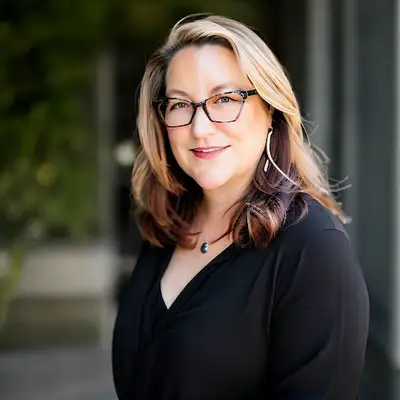
Welcome back to PsyberSpace. I'm your host, Leslie Poston. We hope you enjoyed our brief two week hiatus. We're back on a new day, Thursdays every week. And today, we're unpacking why we're more likely to trust confidence than correctness.
Leslie Poston:You've probably noticed that when presented with two people sharing facts, more often than not, the listener or the watcher will believe the confident person is telling the truth. That pull towards confidence has a name, the credibility trap. It's a cognitive pattern that makes quick, confident wrongness more persuasive than the qualifying nature that often comes with true accuracy. If you've listened to my episodes on truth decay and debate as marketing, you've heard me talk about how misinformation spreads through media systems and platform incentives. Today, I wanna go upstream of all that and look at what's happening inside your head that makes you vulnerable to this in the first place.
Leslie Poston:Your brain makes constant judgments about who to believe, and you don't have time to fact check every claim you hear. If you listen to my episode on decision making under uncertainty, you've definitely heard me talk about how our brains use mental shortcuts to cope with incomplete information. Confidence is one of those shortcuts. That's called the confidence heuristic. When someone expresses high certainty about a claim, your brain treats their certainty as evidence that they're correct.
Leslie Poston:For most of human history, this was a useful tool. In small communities where people spoke from direct experience, confidence and knowledge tended to go together. If someone told you with certainty that a particular berry was poisonous, well, that confidence probably reflected something they'd learned firsthand the hard way. What makes the confidence heuristic powerful is that it operates primarily through verbal cues. Researchers tested this by comparing face to face communication with text based communication and found that heuristic was equally strong in both.
Leslie Poston:It's the language itself, the person's word choice, their lack of qualifiers, and the directness of assertion that drives the effect more than tone of voice or body language. That means the heuristic transfers perfectly to every medium we consume, including articles, social media posts, podcast monologues, or political speeches. The person doesn't need to be in the room with you to trigger it, and they don't need to be deliberately manipulating you either, although sometimes they are. Most people who sound certain feel certain. The confidence heuristic can't tell the difference between someone who's certain because they've earned it and someone who's certain because they don't know enough to doubt themselves.
Leslie Poston:If you've listened to earlier episodes of the show, you've also heard me talk about the Dunning Kruger effect. The relevant piece of that today is the asymmetry it creates. People with shallow knowledge overestimate their understanding because they lack the expertise to see what they're missing, while people with deep knowledge tend toward caution because they're aware of complexity that they haven't fully resolved. That asymmetry feeds directly into the confidence heuristic and inverts the signal it was designed to read. Research on something called overclaiming reveals a behavior that goes beyond simple overconfidence.
Leslie Poston:Researchers gave participants lists of terms and asked them to rate their familiarity with each one. Some of the terms were real and some were fabricated. Consistently across the study, people who perceived themselves as knowledgeable in a domain were more likely to claim familiarity with the fake terms. The more someone felt like an expert, the more likely they were to say they recognized something that was completely invented for the study. And these participants weren't bluffing.
Leslie Poston:Their felt sense of expertise generated a kind of false recognition where plausible sounding things got absorbed into what they believed they already knew. A more revealing finding came from a follow-up study looking at what happens after someone receives a small amount of education in a new subject. Students who took a single introductory finance class became more likely to claim familiarity with non existent financial concepts compared to a control group. That effect persisted for at least two years. The researchers attributed this to two things happening simultaneously.
Leslie Poston:The introductory class increased the students' self perceived expertise in finance, and it gave them just enough schematic understanding to make fabricated terms sound like something they should recognize. They'd learned the vocabulary and the general contours of the field, so their brain started pattern matching new inputs into that framework regardless of whether those inputs were actually real. This is a more specific and more troubling finding than the general observation that people overestimate what they know. It means that the process of learning a little about something can actively erode your ability to recognize the boundaries of your own knowledge. Side note, this is a risk use of LLMAI increases.
Leslie Poston:With this erosion of the ability to know the boundaries of your knowledge, you go from knowing that you don't know, which is an honest and protective position, to feeling like you've got a handle on the subject, which opens you up to exactly the kind of false confidence that the credibility trap runs on. And this applies to all of us in some domain. Anyone who's ever read a few articles on a complicated topic and then felt ready to hold forth on it has experienced this from the inside. Everything I've described so far happens at the level of individual cognition. The credibility trap takes on a different scale entirely when confidently wrong people are handed platforms that carry built in authority signals.
Leslie Poston:To understand that, we need to understand the authority heuristic. When a source is identified as an authority, people automatically assign credibility to what that source says. The keyword is automatically. A credential, a popular podcast or show, an official government appointment of some leader's crony, These all function as cognitive stamps of approval that operate below conscious awareness. One study found that when participants received health information from someone identified as a doctor, they were more likely to accept claims supporting pseudoscientific beliefs and more resistant to information challenging those beliefs.
Leslie Poston:The authority cue suppressed the scrutiny that they would have applied to the same claim from an unlabeled source. This cue is why you see commercials for toothpaste and supplements delivering their claims using actors and doctor's coats. Now layer this on top of the confidence heuristic. A person with a medical degree or a large platform makes a confident assertion about a topic outside their actual area of training. For example, if I suddenly started talking confidently about real estate because I bought a home one time instead of my actual area of knowledge, which is psychology, the authority heuristic would signal the audience this person is credible because of their credential or their visibility.
Leslie Poston:The confidence heuristic signals the audience, this person is right because they sound certain. And the overclaiming research tells us the speaker may genuinely believe what they're saying because they've accumulated just enough knowledge in this area to feel like an expert without having the depth to see their own gaps. Every piece of the credibility trap is active at the same time, and no single one of them is easy to override consciously. You can see this play out when a physician gets appointed to a government health role and starts making public statements about topics well outside their specialty. Their audience doesn't distinguish between trained in this specific area of medicine and the more general has a medical degree.
Leslie Poston:The credential is the credential, and the authority heuristic doesn't parse specialties. You see it with podcast hosts who've built massive audiences through entertainment commentary and then began treating every subject, including nutrition, geopolitics, or epidemiology as within their competence. The audience processes their confidence as credibility because the platform itself has become the authority signal. You see it with manosphere content and the manosphere ecosystem where overconfident men deliver incredibly shallow, oversimplistic takes on psychology, health, or relationships with absolute certainty to audiences of millions who have no framework for evaluating the accuracy of what they're hearing. The overconfidence literature consistently finds that men on average tend to be more overconfident than women, and the platforms that reward confident delivery disproportionately amplify that pattern.
Leslie Poston:The result is significant harm. Public health choices informed by misinformation, unproven treatments gaining traction while evidence based ones lose public trust. Policy positions built on oversimplification gaining political power because the speaker sounds certain, and the platform is large enough that the audience reads it as proof. If you're listening to this and thinking, I'm too smart, I'd see right through that. This section is especially for you.
Leslie Poston:Researchers have studied a trait they call bullshit receptivity. The tendency to rate vague, randomly generated statements as profound. People who score high on this measure also rate fake news headlines as more accurate and are less able to distinguish fake from real in general. The researchers describe this as reflexive open mindedness, a stable cognitive tendency to accept claims without much scrutiny. What's useful about this research is that it identifies a measurable individual difference in susceptibility, and it correlates with something specific.
Leslie Poston:People who score high on bullshit receptivity tend to rely on more intuitive thinking and less on analytic thinking. They're more likely to go with how something feels rather than stopping to assess whether it holds up. Confident delivery exploits this tendency directly because certainty in a speaker produces a feeling of trustworthiness in the listener that has nothing to do with the content of what's being said. A large study on overconfidence in news judgment found that people who were most overconfident about their ability to distinguish real news from fake were actually more susceptible to false stories. They visited more false news websites, they were more willing to share false headlines, and they were especially vulnerable to misinformation that confirmed their existing beliefs.
Leslie Poston:These overconfident individuals were largely unaware of their own vulnerability. They rated their news literacy as high, and that self assessed competence was part of what left them exposed. If you've listened to previous episodes, then you know that repetition increases perceived truth, and that the platforms we connect on reward emotional content over accurate content. What this research adds is the individual piece. Confidence in your own discernment can function as an off switch for the critical evaluation that would otherwise protect you.
Leslie Poston:Those researchers suggested that reaching these overconfident individuals could help reduce the spread of misinformation, but they acknowledge it's a hard problem to solve because the trait that makes them vulnerable also makes them unlikely to think they need help. The penalty for honesty is where I think the credibility trap does the most lasting damage. Truly honest expertise sounds uncertain when you hear it because it is uncertain. When a researcher has spent years studying a question, their answer comes with qualifiers like the evidence suggests or under these conditions or with some important caveats or the more frequent, we don't fully understand this yet, but that's what scientific rigor sounds like. It's the sound of someone who has spent enough time with the subject to know where the boundaries of current knowledge actually are and who understands that knowledge grows with further study.
Leslie Poston:In science, hedging isn't weakness. It's a professional norm that reflects the genuine state of evidence, which is almost always more provisional and more complicated than the public wants to hear. The confidence heuristic doesn't have a way to account for this. It registers hesitation and qualifiers as low confidence and downgrades the speaker. So the person who's done the most work to understand a topic can come across as less credible than the person who learned about it last week and who has no such reservations.
Leslie Poston:The most accurate information arrives in the least persuasive packaging. This affects who gets heard and who gets amplified. Media producers, event organizers, podcast hosts, and like tend to select for guests who give confident, quotable, definitive answers. The expert who says, we don't have enough data to show that yet doesn't make for compelling content. The one who says, absolutely, here's the answer, gets a return invitation.
Leslie Poston:Over time, the public facing version of expertise gets filtered for confidence, and the most careful, most accurate thinkers get selected out of public discourse. The voices that remain in the public conversation trend toward overconfidence because those are the voices that survived the selection process. This creates a genuine chilling effect on expert participation in public life. Researchers and clinicians who see misinformation being spread by platformed credentialed figures face a dilemma. Speaking up means entering a communication arena where their careful qualified language will be structurally less persuasive than the confident oversimplifications they're trying to correct.
Leslie Poston:And in the current political environment, experts who contradict popular but inaccurate claims increasingly face backlash, funding threats, and professional retaliation. The cost of public engagement keeps going up, while the likelihood of being heard keeps going down. Some researchers leave the conversation entirely. The credibility trap pushes the accurate voices out, which makes the information environment even more saturated with confident wrongness, which makes it even harder for the next expert to break through. This is a structural problem, not an individual one.
Leslie Poston:We're not gonna fix it by telling individual experts to just be more confident. The qualifications and hedging exist for a reason, reflecting our genuine state of knowledge. Asking scientists to strip those out in order to compete with people who have no such constraints is asking them to be less accurate in their science in order to sound more credible. And that trade off is something the credibility trap feeds on. So what can you do?
Leslie Poston:Well, you can't override the confidence heuristic entirely because it's built into how your brain processes information. You can build some habits that make you less susceptible to it. Start treating uncertainty in a speaker as a potential signal of knowledge rather than weakness. When someone qualifies their claims, consider the possibility that they're doing so because they know the subject well enough to understand its complexity. That takes practice because the heuristic pushes you towards the opposite interpretation automatically.
Leslie Poston:Pay attention to the relationship between someone's confidence and the breadth of their claims. People with genuine deep expertise tend to be confident within their specific area and more cautious outside of it. People running on overclaiming tend to be uniformly confident across everything they discuss. You can see an example of this with me in this podcast. I'm a research psychologist that specializes in applied psychology with a focus on media and technology.
Leslie Poston:So on episodes where I've had to discuss clinical psychology, not only have I reached out to colleagues in the field to help me deepen what I'm discussing, but you'll hear me qualify. This is not my area of expertise. People running on over claiming tend to be uniformly confident across everything they discuss. That kind of broad undifferentiated certainty is a warning sign worth learning to recognize. Notice when you're responding to authority cues instead of evaluating content.
Leslie Poston:A credential or a platform are reasons to listen, but they're not reasons to stop thinking critically. A doctor speaking about their specialty, and that same doctor opining about economic policy are drawing on very different levels of knowledge, even though the authority cue feels identical to the listener. The same goes for podcasters, commentators, and public figures. Being good at building an audience tells you someone is good at building an audience. It doesn't tell you anything about the accuracy of what they're saying on any given topic.
Leslie Poston:And check your own confidence about your own discernment. The research on overconfidence and news judgment is genuinely uncomfortable to sit with. That feeling of I can tell what's real and what's fake is itself a risk factor. Staying open to the possibility that you've been persuaded by confidence rather than evidence takes ongoing deliberate effort. Even just building the habit of asking yourself, am I believing this because it's well supported or because the person who said it sounded like they knew?
Leslie Poston:Can change how you process information going forward. It takes a little practice, but I'm confident that you can do it. Thanks for listening to PsyberSpace. I'm your host, Leslie Poston, signing off. Until next time, stay curious, and don't forget to subscribe so you don't miss an episode.
Leslie Poston:And if this resonated with you, send it to a friend you think might like it.
Creators and Guests